.webp)
My Kingdom for a Bitcoin
By Richard Laiderman
Oscar Wilde wrote that “nowadays people know the price of everything but the value of nothing.” In a slight twist, today we know the price of a Bitcoin, which just tapped $100,000, but not its value, which may still be nothing. We are living through an era where Price and Value have not just divorced; they have filed for restraining orders against each other. Social media is hard at work!
It’s like Tulip Mania on steroids, but with better memes. In 1637, the Semper Augustus tulip bulb cost 5,500 guilders, enough for a substantial house in Amsterdam. We look back and laugh at the Dutch. But look at us now. In 2021, we had Dogecoin. By late 2024, the market decided that PNUT, a meme coin based on a euthanized squirrel was worth $1.6 billion. That is the price of roughly 4,000 median American homes. In 2025, we saw the rise of Fartcoin, a currency invented by an AI agent that literally tokenized flatulence. It reached a market cap of nearly $800 million. The Turing Test has been passed, and it turns out that AI doesn't want to destroy us; it just wants to gaslight us into buying coins that pass gas.
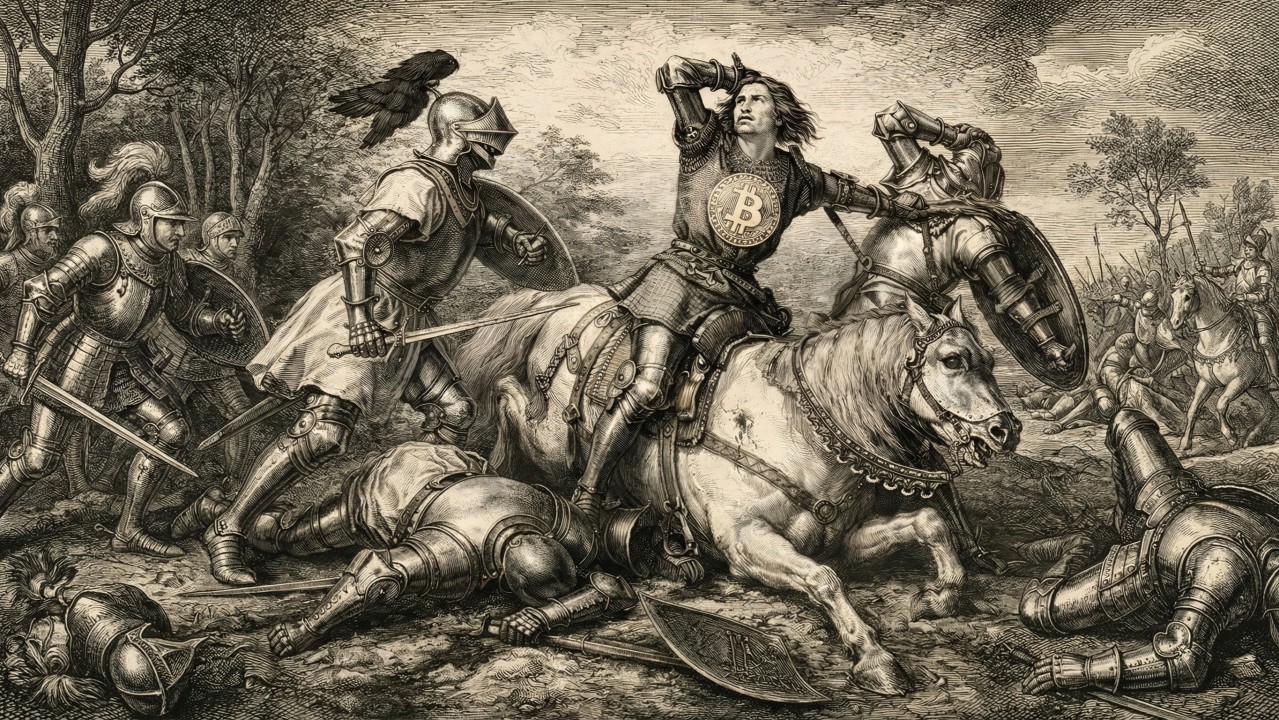
Tens of millions of unsecured crypto "coins" have been launched, and over 99% are dead or worthless today. The vast majority of crypto "value" still resides in only two coins: Bitcoin and Ether. But Bitcoins don’t fit neatly into standard ideas about valuation. The value of a financial asset is the present value of future cash flows. The value of a non-financial asset, like a horse, is its utility. A horse is sometimes worth a kingdom, it can carry you to safety.
Bitcoin has no cash flows (unlike a bond) and no real-world utility (unlike the horse). It is just "digital information." Now, information can be valuable, it can turn the tide in a war or save a life in a hospital. Unfortunately, Bitcoin carries no such informational value. It is just a ledger of who owns the nothingness. It is hard to understand why so many people still believe in the value of Bitcoin but do not see the risk that it will suffer the same ignominious death as virtually all the other unsecured altcoins? The only reason that makes sense to me is greed, which often trumps fear.
First on the part of miners and exchanges who increasingly extract rents. We are told this is a decentralized utopia, yet the data tells a different story:
“The top 50 miners control nearly 50% of network power. Exchanges and trade-related entities account for 70% of all bitcoin blockchain activity.”
All part of the highly concentrated governance ecosystem of unregulated yet trusted third parties that has formed around Bitcoin. Note the irony from the original vision of decentralized control and safety without trusted third parties. We simply replaced the Federal Reserve with a server farm in Texas and an unregulated exchange in the Seychelles.
There is also greed on the part of whale investors. The holdings of Bitcoin are incredibly concentrated:
“The top .01% of individual investors hold about 25% of circulating supply.”
To put this in perspective, it is an order of magnitude more concentrated than wealth in the United States. It is even higher than the wealth concentration in 1780 France, just prior to the revolution. At a total market cap of nearly $2 trillion, these whales control vast fortunes which cannot be easily liquidated due to insufficient real liquidity.
I say “real” liquidity because:
“90% of Bitcoin transaction volume consists of within-entity transfers for wallet management and obfuscation purposes rather than genuine economic activity.”
Lacking liquidity, whales have, until recently, been able to exit primarily by selling into rallies. Research confirms that is exactly what has been happening.
But here is the troubling new twist for 2026: The "Whales" have found their exit strategy. They are selling to "Institutional Whales." All while Bitcoin's use for real economic activity is at record lows. Over the last year, we’ve watched early adopters unload their bags onto pension funds, asset managers, and ETF providers (entities like Fidelity and BlackRock). The bitcoin lobby has successfully convinced the financial establishment that holding a string of digital code, concentrated in fewer hands than the French Court, is a prudent investment and treasury strategy.
How will it end? My prediction is that it will end as Hemingway described, becoming bankrupt: "Gradually, and then all at once." We have seen the gradual erosion of the original Value vision. The "currency" is dead. The "decentralization" is a myth. The only thing left is the Price. When the "all-at-once" part happens, it won't be the bitcoin whales who lose, they are already cashing out. It will be the retirees and the financial institutions holding the bag. Bitcoin once held out the promise of a better way after the last financial crisis. Ironically its end, not with a whimper but a fart, may trigger the next one.
Italic quotes from: NBER working paper 29396, Blockchain Analysis of the Bitcoin Market, July 2025
About the Author
Richard Laiderman is a co-founder and the board chair at StandardC. He has held senior executive roles at Bank of America, Providian, Ameriprise, and Visa. He was part of Visa’s IPO team and served as Visa’s Head of Global Treasury for 7 years. Richard has a track record of successful risk management during periods of crisis. He helped Providian survive its stock collapse, created Ameriprise’s variable annuity living benefits hedging program just prior the 2008 market crash (which allowed them to decline TARP funding), and managed $19B of Visa IPO proceeds just days after Bear Sterns’ collapse.